Deep Brain Stimulation - Epilepsy
DEEP BRAIN STIMULATION FOR EPILEPSY
THERAPY OVERVIEW
Deep brain stimulation may also be an option for some people with drug-resistant epilepsy, which means seizures continue despite appropriate treatment with anti-seizure medications.
Epilepsy causes recurring seizures due to abnormal electrical activity in the brain. Treatment usually begins with anti-seizure medication. Depending on the type and cause of the seizures, other treatments may include epilepsy surgery or neuromodulation therapies.
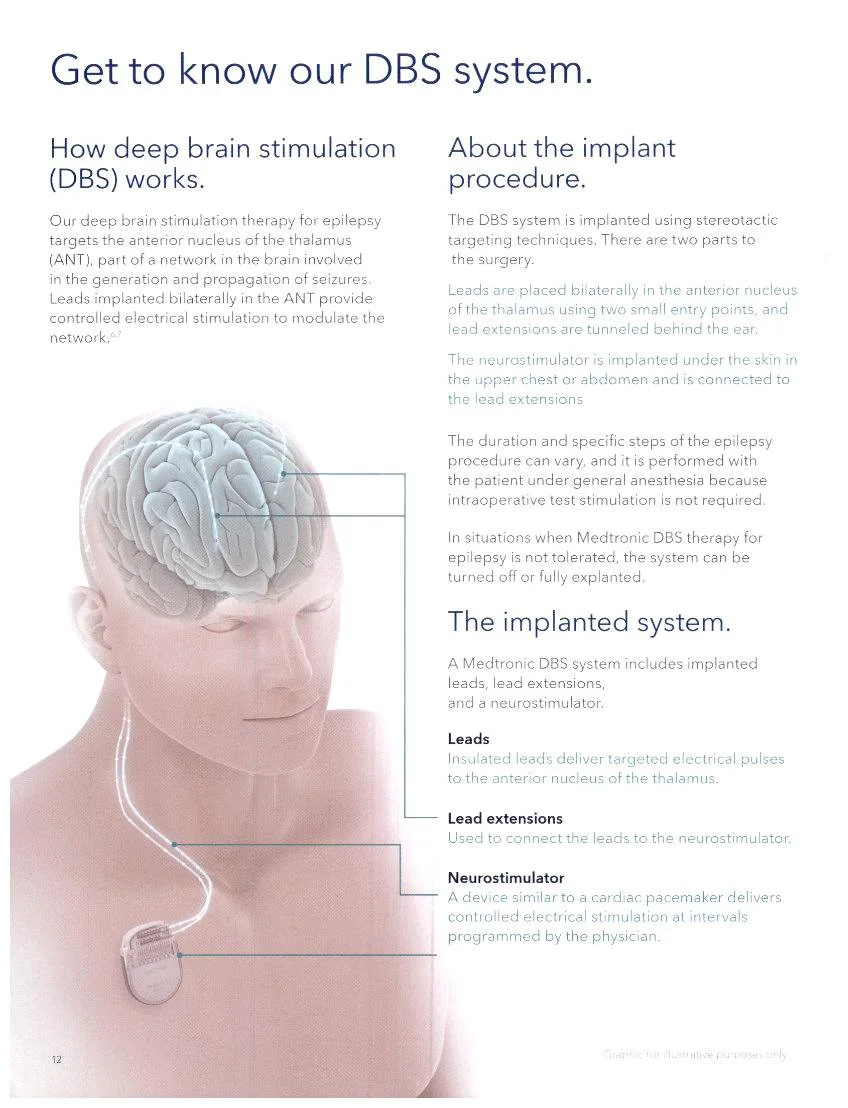
For certain adults with epilepsy who continue to experience seizures despite medication, DBS can be used to stimulate specific areas involved in seizure activity. One approach targets an area called the anterior nucleus of the thalamus, which is involved in brain networks associated with some types of seizures.
The implanted DBS device delivers electrical stimulation to help regulate these networks. Unlike treatment designed to stop an individual seizure as it begins, DBS provides ongoing stimulation intended to reduce seizure frequency over time.
DBS does not cure epilepsy, and patients may still need anti-seizure medication after the procedure. The goal is to provide better seizure control and improve quality of life when other treatments have not been successful.
HOW THE THERAPY WORKS
DBS uses an implanted neurostimulator to deliver carefully controlled electrical impulses to targeted areas of the brain. After implantation, the system is programmed by your medical team and can be adjusted over time to help achieve the best possible symptom control.
HOW THE PROCEDURE WORKS
DBS treatment involves surgically placing thin leads in specific areas of the brain and connecting them to a neurostimulator typically implanted beneath the skin of the chest. After the procedure, your care team programs the device based on your individual treatment needs.